

Are THC Drinks Legal in Texas? A Complete Guide
Introduction — Why This Question Keeps Coming Up
Texas has one of the most talked-about, and most misunderstood, legal landscapes for hemp products in the country. On one hand, Texas is home to a booming hemp beverage industry, with THC seltzers and sodas sold in bottle shops, bars, and grocery stores across the state. On the other hand, headlines about attempted bans and shifting regulations have left a lot of everyday consumers unsure whether picking up a THC drink at their local store is actually legal. The short answer is: yes, hemp-derived THC drinks are currently legal in Texas, but the details matter, and they've shifted more than once in the past few years.
This guide walks through exactly where Texas law stands today, how it connects to federal hemp law, and what you need to know before you buy — or ship — a THC beverage in the state.
Federal Law: The 2018 Farm Bill Foundation
Every state's hemp market starts with the same federal foundation: the 2018 Farm Bill. This legislation legalized hemp at the federal level and defined it as cannabis containing no more than 0.3% Delta-9 THC by dry weight. That threshold is what allows companies to produce hemp-derived THC beverages that are federally legal, distinct from marijuana, which remains a controlled substance federally regardless of individual state marijuana laws.
This 0.3% dry-weight limit is the legal mechanism that makes products like THC seltzers, sodas, and shots possible nationwide — including in states like Texas that have not legalized recreational marijuana. It's a narrow, specific definition, and it's the reason hemp beverages exist in a completely separate legal category from dispensary cannabis.
Texas State Law: Where Things Get Complicated
Texas adopted its own hemp program in 2019 through House Bill 1325, which mirrored the federal 0.3% THC threshold and legalized the production, processing, and retail sale of hemp products statewide. For several years, this created a stable, growing market for hemp-derived THC beverages sold through licensed retailers.
In 2025, Texas lawmakers attempted to pass a near-total ban on consumable hemp products with any detectable THC, which would have effectively wiped out the hemp beverage industry in the state. That bill was vetoed by the governor, who instead called for a stronger regulatory and enforcement framework rather than a blanket prohibition. As of now, hemp-derived THC beverages remain legal in Texas under the existing state hemp program, but the debate over tighter regulation is ongoing, and the political landscape around it has been unusually active compared to most other states.
The Texas DSHS Hemp Program and Registration
Hemp products sold in Texas fall under the oversight of the Texas Department of State Health Services (DSHS), which requires hemp processors and manufacturers to register their products and meet labeling, testing, and packaging requirements. Legitimate hemp beverage brands operating in Texas should be able to point to lab testing and compliance documentation showing their products fall within the legal 0.3% THC threshold.
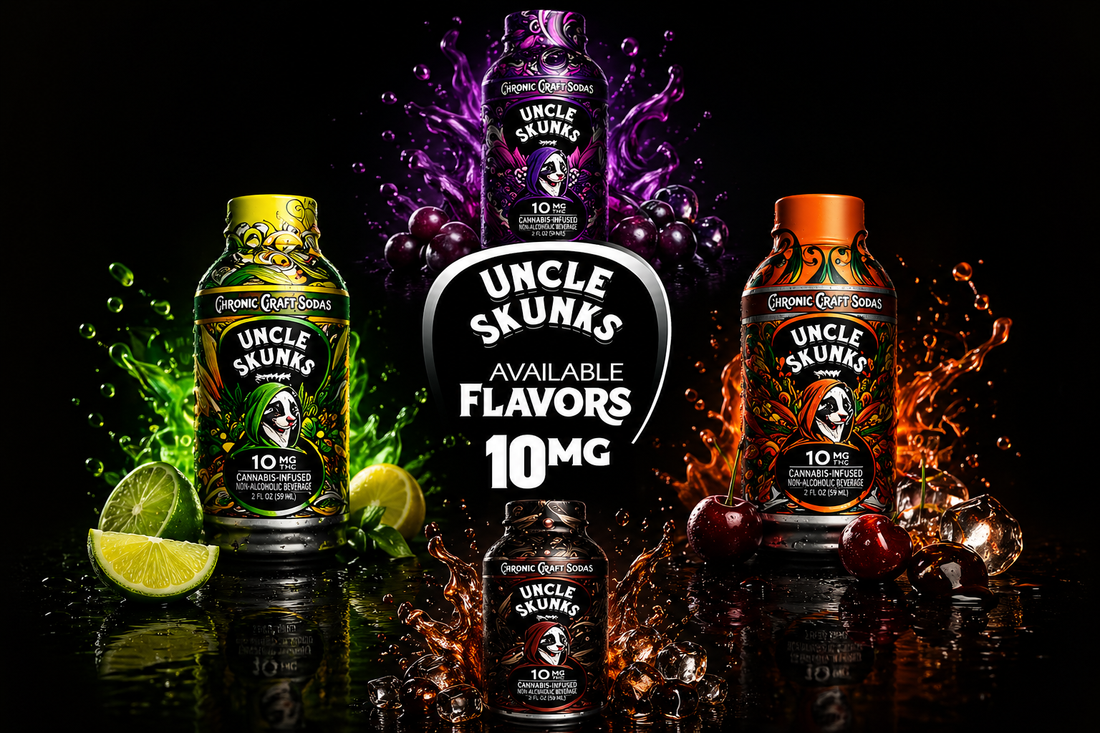
This is one of the simplest ways to tell a compliant product from a questionable one: reputable brands make their lab results and compliance information easy to find, and they clearly label potency by the milligram, whether you're browsing flavors or comparing different strength options before you buy.
What "Legal" Actually Means for a THC Drink
Legal doesn't mean unregulated, and it doesn't mean identical to buying a soda off the shelf. A legal hemp-derived THC beverage in Texas is one that is made from hemp (not marijuana), contains no more than 0.3% Delta-9 THC by dry weight, has been manufactured and labeled in compliance with Texas DSHS hemp program rules, and is sold to an adult who meets the state's age requirement. All four of those conditions need to be true for a product to sit clearly on the legal side of the line, which is why sourcing from a compliant, transparent brand matters more in Texas than it might in states with a more settled regulatory environment.
Age Requirements and Purchase Rules in Texas
Texas requires buyers of hemp-derived THC products to be at least 21 years old, aligning hemp beverages with the same age threshold used for alcohol and, in most states, cannabis products generally. Retailers are expected to verify age at the point of sale, whether that's in person at a store or through age verification during an online checkout process. If you're purchasing THC beverages online for delivery to a Texas address, expect to confirm your age and, in many cases, provide ID verification before your order ships.
Where You Can Buy THC Drinks in Texas
Hemp-derived THC beverages are sold through a wide range of retail channels in Texas, including specialty bottle shops, smoke shops, some bars and restaurants, and online direct-to-consumer stores. Because the retail landscape varies so much by city and county, checking directly with a retailer — or building your own order through a brand's flavor bundle builder online — is often the most reliable way to know exactly what strength and flavor options are available to you, without relying on assumptions about what a given local store carries.
Shipping THC Drinks to a Texas Address
Online ordering has become one of the most common ways Texans buy hemp beverages, largely because it guarantees access to a consistent, lab-tested product regardless of what's stocked locally. Reputable brands ship hemp-derived THC drinks to Texas addresses as long as the product meets the federal and state hemp definition, and they typically outline any state-specific shipping restrictions directly on their site. If you're new to ordering online, reading through a brand's blog or FAQ content before checkout is a good way to confirm current shipping policies, since hemp shipping rules can shift as regulations evolve.
What Could Change: Legislative Watch
Texas hemp policy has been more volatile in the past two years than in almost any other state, and that trend doesn't appear to be settling anytime soon. Lawmakers have signaled they'll continue pushing for tighter regulation, stronger age verification, potency caps, or retail licensing requirements in future legislative sessions, even though the 2025 outright ban attempt was vetoed. If you live in Texas and regularly purchase hemp beverages, it's worth keeping an eye on state legislative sessions, since the specific rules — potency limits, retail requirements, or even legality itself — could look different a year or two from now.

How Texas Compares to Neighboring States
Texas's hemp beverage market looks different from some of its neighbors. Oklahoma and Louisiana both have their own hemp programs with varying levels of enforcement, while states like New Mexico have leaned into a broader legal cannabis framework that changes the retail landscape entirely. Understanding that hemp law is genuinely state-specific matters if you travel regionally — a product that's perfectly legal to purchase and carry in Texas may fall under different rules once you cross state lines, since possession and sale regulations for hemp-derived THC vary independently from state to state, even among neighboring states with otherwise similar cultural and political profiles.
This is a good reminder that legality in Texas doesn't automatically translate to legality everywhere, especially if you're traveling with hemp beverages rather than purchasing and consuming them within the state.
How to Verify a Brand Is Actually Compliant
Not every product marketed as a legal THC drink is necessarily compliant, which makes it worth knowing how to check for yourself rather than relying on packaging claims alone. A legitimate hemp beverage brand should be able to provide a Certificate of Analysis (COA) from a third-party lab showing the Delta-9 THC content by dry weight, clear milligram labeling per serving and per container, and manufacturing that aligns with Texas DSHS hemp program registration requirements.
● Look for a published Certificate of Analysis (COA) for the specific batch or product.
● Confirm milligram dosing is clearly labeled per can or serving, not just as a vague percentage.
● Check that the THC listed is Delta-9 and falls within the 0.3% dry-weight federal threshold.
● Buy from retailers or online stores that verify your age at checkout or point of sale.
Taking a few minutes to check this information before your first purchase is a simple habit that protects you as a consumer, especially in a state where the regulatory conversation continues to evolve.
How This Affects Bars, Restaurants, and Retailers
It isn't just individual consumers navigating this landscape — Texas bars, bottle shops, and restaurants that stock hemp-derived THC beverages are operating under the same evolving regulatory environment. Many retailers have become increasingly diligent about sourcing from registered, compliant hemp processors and checking ID carefully at the point of sale, partly in response to the heightened legislative attention hemp products received in 2025. If you're a business owner considering adding THC beverages to your offerings, or simply a customer curious why a favorite spot suddenly started asking more questions at checkout, this heightened diligence reflects the current climate rather than a change in the underlying legality of the products themselves.
This is also a reasonable expectation to have as a consumer: a well-run retailer selling hemp beverages in Texas today should be treating age verification and compliance seriously, not casually, given how closely the category has been watched.

Traveling With THC Drinks In and Out of Texas
If you're traveling to or from Texas, it's worth knowing that carrying hemp-derived THC beverages across state lines can introduce complications even when the product is legal in both your origin and destination states, since transport itself sometimes falls into a legal gray area depending on how it's regulated federally versus at the state level. Airports add another layer of consideration, since TSA policy and individual airport or airline rules don't always align neatly with state hemp law. If you plan to travel with THC beverages, checking current airline and destination-state policy ahead of time is a reasonable precaution, rather than assuming Texas legality automatically extends smoothly to wherever you're headed.
Conclusion — Staying On the Right Side of the Law
As of today, hemp-derived THC drinks are legal to buy, sell, and consume in Texas, provided they meet the federal 0.3% Delta-9 THC threshold and comply with the state's hemp program requirements. The safest approach as a consumer is straightforward: buy from brands that are transparent about lab testing and compliance, confirm you meet the 21-and-over age requirement, and stay generally aware that Texas hemp law has been more actively debated than most states, which means it's worth double-checking current rules periodically rather than assuming nothing has changed.
FAQs
Are THC drinks legal in Texas right now?
Yes. Hemp-derived THC beverages that comply with the federal 0.3% Delta-9 THC threshold and Texas's state hemp program are currently legal to buy and sell in Texas.
Did Texas ban THC drinks?
A 2025 bill proposing a near-total ban on consumable hemp products was vetoed. Hemp-derived THC beverages remain legal under existing state law, though further regulatory changes could still be introduced in future legislative sessions.
How old do you have to be to buy THC drinks in Texas?
You must be at least 21 years old to purchase hemp-derived THC beverages in Texas, and retailers are expected to verify age at the point of sale.
Can THC drinks be shipped to a Texas address?
Yes, as long as the product meets federal and state hemp requirements. Shipping availability and requirements can vary by brand, so it's worth checking a retailer's current shipping policy before ordering.
What's the difference between a legal hemp THC drink and marijuana-derived THC?
Legal hemp THC drinks are derived from hemp and contain no more than 0.3% Delta-9 THC by dry weight, which is federally distinct from marijuana-derived THC products, which remain restricted under both federal law and most Texas regulations.